

Views: 0 Author: Site Editor Publish Time: 2026-05-13 Origin: Site


Heavy building materials consistently increase structural load requirements on modern construction sites. They extend construction timelines significantly. They also inflate specialized lifting equipment costs. Facility managers face this challenge daily. Contractors constantly battle this reality to maintain profitability. Balancing structural integrity against installation speed impacts the bottom line heavily. The glasswool sandwich panel emerges as a highly capable alternative. However, procurement teams often wonder about the specific trade-offs. Does a lightweight core compromise long-term durability? Do building owners sacrifice acoustic control or fire safety? Understanding these performance dynamics dictates successful project outcomes. This guide evaluates the true weight-to-performance ratio of these popular building panels. You will unpack actual installation realities and unique structural benefits. We also highlight specific use cases where they easily outperform denser materials.
Structural Efficiency: Glasswool core densities typically range from 10–50 kg/m³, significantly reducing dead loads on building frameworks and improving seismic resilience.
Labor & Speed: Lightweight properties eliminate the need for heavy machinery for standard panel placements, accelerating installation timelines.
Safety & Compliance: Modern glasswool is EUCEB-certified and classified by the WHO (IARC Group 3) as safe to handle, eliminating the risk of hazardous slag balls during cutting.
Compromise-Free Performance: Despite being lightweight, these panels deliver quantified thermal resistance (conductivities as low as 0.030–0.043 W/m·K) and robust fire protection.
What exactly goes into these insulation cores? Manufacturers spin recycled glass and abundant natural sand into exceptionally fine fibers. This complex process creates a resilient, flexible core material. The resulting glasswool traps massive amounts of air between overlapping strands. This structural design keeps the product remarkably light.
We must compare core density metrics directly. Glasswool density generally sits between 10 and 50 kg/m³. You can contrast this against heavier commercial alternatives. Rockwool panels often exceed 100 kg/m³ in density. Traditional masonry weighs exponentially more per square meter. This massive weight difference changes how engineers design primary steel structures.
Seismic and structural advantages become obvious quickly. A lighter building envelope drastically reduces the overall dead load. Your building framework carries less constant weight. This translates to lighter foundation requirements. Furthermore, long, interwoven glass fibers prevent internal core failure. The core material does not sag during sudden vibrations. It refuses to detach or collapse during seismic events. The internal fibers flex and return to their original shape. This unique structural synergy ensures exceptional long-term stability for commercial facilities.
Material Type | Average Density (kg/m³) | Dead Load Impact | Seismic Resilience |
|---|---|---|---|
Glasswool Core | 10 - 50 | Very Low | Excellent (Flexible fibers) |
Rockwool Core | 80 - 120 | Moderate to High | Good (More rigid) |
Traditional Masonry | 1800+ | Extreme | Poor (Prone to cracking) |
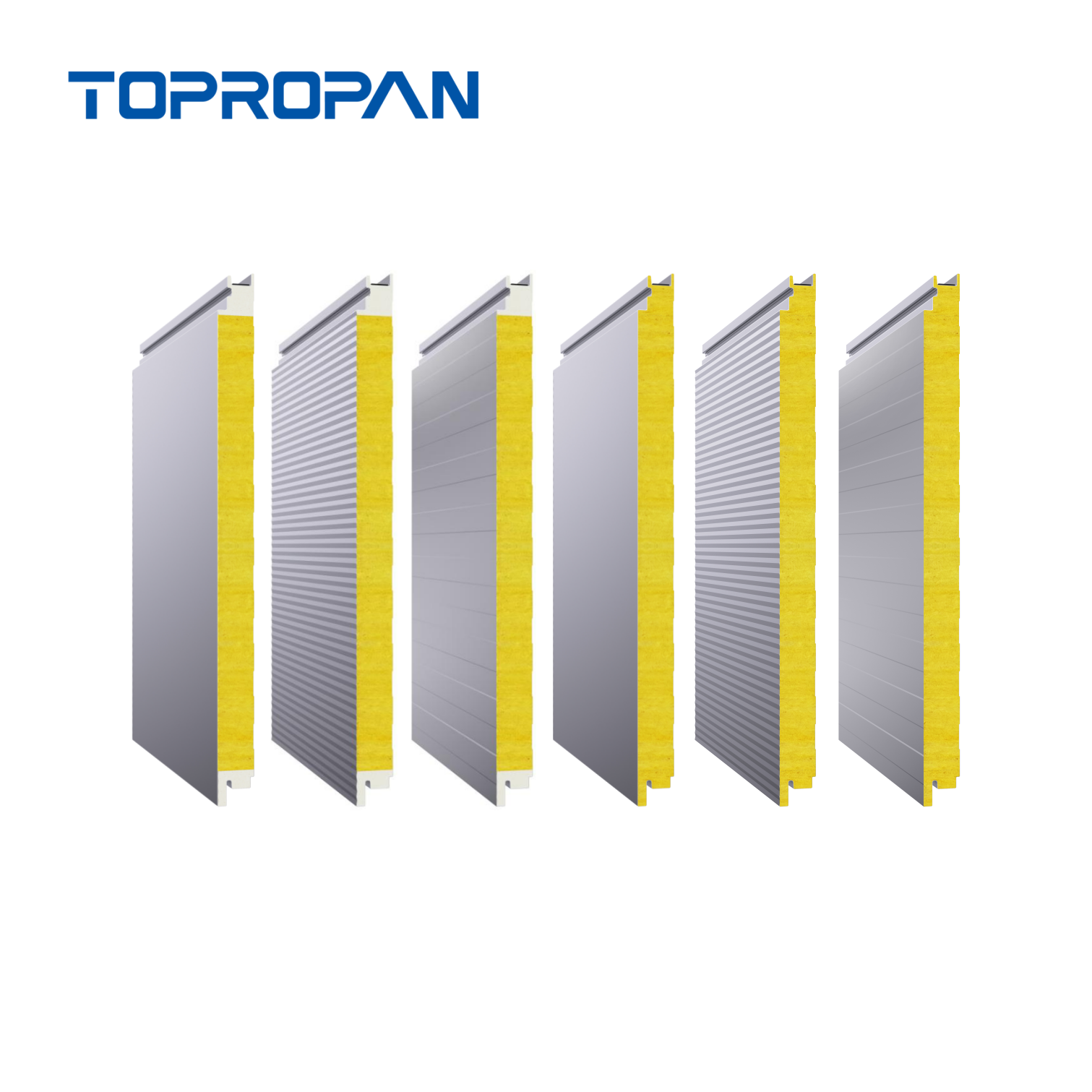
Handling becomes noticeably easier on busy job sites. Crews move lighter panels swiftly without excessive fatigue. Predictable cutting behavior speeds up custom wall fittings. Workers splice edges together much faster than before. The lightweight nature translates directly to measurable operational efficiency. You save valuable hours during the envelope enclosure phase.
We must address ergonomics and safety openly. Historical health concerns often surface regarding fibrous insulation materials. We look strictly to the scientific facts. The World Health Organization classifies modern glasswool under IARC Group 3. It officially holds the exact same biological safety tier as tea or coffee. Furthermore, rigorous EUCEB certification guarantees biological solubility. These fibers dissolve naturally if inhaled briefly. High-quality manufacturing also extracts hazardous "slag balls" completely. Installation crews avoid skin micro-abrasions. They experience no intense itching or respiratory irritation. You protect your workforce while maintaining high productivity.
Standardized installation requires clear sequences. Following a Standard Operating Procedure (SOP) ensures perfect alignment. Consider this proven three-step sequence:
Verify framework plumbness: Always check steel column verticality before lifting any panels into place.
Secure bottom plates: Install durable water-retaining base plates to protect the core from ground moisture.
Utilize proper fasteners: Drive self-tapping screws at precise intervals for perfect vertical and horizontal alignment.
Selecting an easy install panel manufacturer does not mean sacrificing building code compliance. These lightweight systems deliver serious return on investment. Look closely at the core micro-structure. Microscopic gas pockets stay trapped inside the layered glass fibers. This layout physically prevents internal thermal convection. Thermal conductivities routinely drop as low as 0.030–0.043 W/m·K. Stable indoor temperatures directly reduce HVAC operational costs. HVAC systems often consume up to 60% of total building energy. Cutting these costs transforms your facility overhead.
Acoustic attenuation works via basic physics. Sound waves enter the complex fiber network continuously. Friction converts this acoustic energy directly into mild thermal energy. The noise simply dissipates inside the panel. You can achieve a remarkable ≧37dB noise reduction using just a 50mm thick panel. This makes them ideal for noisy industrial zones or busy commercial districts.
Fire safety remains paramount for any modern construction. You need a reliable fireproof building panel. Glasswool cores resist extreme temperatures up to 1000℃. They do not fuel flames. They do not emit heavy toxic smoke. This extreme thermal resistance buys critical evacuation time during active emergencies. Crucially, it provides this rigorous protection without adding massive weight to your roof structure or exterior walls.
Evaluation Metric | Performance Benchmark | Direct Benefit |
|---|---|---|
Thermal Conductivity | 0.030–0.043 W/m·K | Massive reduction in HVAC energy use |
Acoustic Reduction | ≧37dB (at 50mm thickness) | Filters out heavy industrial machinery noise |
Fire Resistance | Core withstands up to 1000℃ | Provides maximum emergency evacuation time |
No building material operates perfectly in every single environment. Where does glasswool fail? Moisture sensitivity represents its absolute primary weakness. Glasswool loses insulation efficacy quickly if soaked.
Mitigating Moisture: Specify proper edge sealing immediately. Install high-quality vapor barriers on the warm side of the wall. Never deploy these specific panels in subterranean spaces. Avoid highly damp baseline environments.
Mitigating Compression Risks: Warn construction crews against over-tightening fixings. Physically crushing the exterior steel skins destroys vital internal air gaps. This immediately ruins the stated thermal resistance. Maintain the factory thickness.
Mitigating Thermal Bridging: Precise joint sealing prevents invisible energy leaks. Pay special attention during the splicing phase. Poorly sealed seams allow cold air to bypass the insulation core entirely.
Building trust requires complete transparency. Acknowledge these limitations early during the design phase. You can engineer out these risks easily. Proper site supervision ensures the panels perform exactly as specified in the laboratory.
Assess local building codes carefully. Verify municipal regulations regarding exterior fire ratings. Check national energy efficiency mandates before deciding on final panel thickness. Some regions demand thicker insulation layers to meet strict winter energy targets. You must align material specifications directly to these legal requirements.
Vet your suppliers rigorously. Do not accept vague technical sheets. What should you look for in a leading manufacturer? Demand transparent density specifications upfront. Ask for verifiable CE or EUCEB safety certifications. Ensure they guarantee strict dimensional tolerances. Perfect manufacturing tolerances ensure easy splicing on site. Poor tolerances lead to site delays and compromised weather seals. Choose partners who back their manufacturing data with independent laboratory testing.
We return to the central question. Glasswool panels are legitimately lightweight. Their true structural value lies in a unique intersection of benefits. They combine extraordinarily low structural load requirements with worker-friendly installation speeds. They achieve this while maintaining high thermal and acoustic performance. You do not sacrifice fire safety for speed. Evaluate your specific environmental conditions carefully. Look closely at baseline humidity versus thermal needs. Finally, consult a technical engineer. They will specify the exact core density and steel gauge required for your specific facility.
A: Yes. For general acoustic needs, the combination of panel thickness and internal air gaps dictates performance more than the raw material. Glasswool performs exceptionally well for broad-frequency sound absorption. The friction created by the fine glass fibers effectively neutralizes incoming sound waves.
A: No. When properly sealed against moisture, glasswool maintains its structure indefinitely. You must install it correctly without over-compression. Under normal operating conditions, these lightweight panels share the exact same lifespan as the primary building structure itself.
A: No. Their lightweight and uniform density allow them to be cut with standard site tools. You do not need specialized heavy machinery. This significantly reduces labor fatigue compared to cutting much denser, heavier insulation boards on site.


