

Views: 0 Author: Site Editor Publish Time: 2026-05-26 Origin: Site


Modern commercial roofs undergo a massive paradigm shift today. They no longer act merely as passive weather barriers against rain and wind. Today, they function as active, revenue-generating structural power stations. We must look beyond basic solar output to grasp their full operational potential. The true holistic energy impact emerges from combining polyurethane (PU) thermal resistance and photovoltaic (PV) generation. You need to understand this dynamic shift in building physics. Facility managers and B2B buyers face immense pressure to reduce carbon footprints and energy bills. This guide provides you with a clear, evidence-based framework. It helps you evaluate the exact structural realities, precise thermal performance, and financial returns of an integrated system before you commit heavy capital expenditure. By mastering these core concepts, you ensure your building operates at peak efficiency for decades. We will thoroughly explore active and passive models, critical load metrics, and smart procurement strategies.
Dual Energy Impact: The true energy efficiency relies on a two-pronged model—generating renewable electricity while simultaneously slashing HVAC loads via the PU core.
Structural Synergy: Pre-engineered integration eliminates the need for post-construction roof penetrations, mitigating the risk of thermal bridging and moisture ingress.
Lifecycle Alignment: The financial viability hinges on matching the lifespan of the PV modules with the durability and warranty of the insulated roof deck.
Load Bearing is Critical: True efficiency is only realized if the PU panel thickness and density are correctly specified to handle regional wind and snow loads alongside the PV dead weight.
Contrast traditional retrofitted solar arrays with a unified, purpose-built system. Older retrofit methods bolt solar frames onto existing roofs. They add massive dead weight and introduce moisture risks through drilling. A unified system eliminates these severe vulnerabilities entirely. It merges the roof deck and the energy generator into one cohesive, pre-engineered unit.
Consider the passive energy savings first. Closed-cell polyurethane heavily limits conductive heat transfer. This thick insulation keeps internal building temperatures remarkably stable year-round. It drastically reduces your facility's baseline energy demand. Your HVAC equipment works much less to maintain comfortable conditions in extreme weather.
Next, consider active energy generation. The integrated PV layer captures incoming sunlight efficiently. It offsets your remaining operational energy consumption. The roof produces electricity directly at the point of consumption, minimizing transmission losses entirely.
This creates a powerful multiplier effect. Generating solar power on a highly insulated envelope yields a much faster payback time. It creates a compounding cycle of efficiency. You produce clean, renewable power daily. You waste significantly less of it heating or cooling the interior space. An energy saving roof panel bridges this exact gap flawlessly. It handles heavy passive retention and high active generation simultaneously, maximizing every square meter of your roof.
When evaluating an insulated PV roof panel, standardized thermal conductivity benchmarks become essential criteria. You must analyze U-values and R-values meticulously to understand heat flow. Closed-cell PU cores outperform traditional EPS and mineral wool heavily in solar applications. They offer superior thermal resistance per inch of thickness. This high density matters immensely when trying to keep the overall roof profile manageable.
Let's review a structural chart comparing thermal properties:
Chart 1: Comparative Thermal Performance Chart | |||
Insulation Core Type | Typical R-Value (per inch) | Thermal Conductivity (λ) | Solar Integration Suitability |
|---|---|---|---|
Polyurethane (PU/PIR) | R-6.0 to R-6.5 | 0.022 W/mK | High - Excellent strength-to-weight ratio |
Mineral Wool | R-3.0 to R-3.3 | 0.040 W/mK | Medium - Fire resistant but exceptionally heavy |
Expanded Polystyrene (EPS) | R-3.6 to R-4.2 | 0.035 W/mK | Low - Insufficient compressive strength |
Traditional solar racking screws pierce the roof violently. They create highly conductive heat leaks across the building envelope. They also invite long-term moisture ingress and mold. Purpose-built clamping systems fix this exact issue immediately. They grip the exterior standing seam directly. This intelligent mechanism preserves the continuous thermal envelope seamlessly. You never break the essential insulation barrier.
Many building owners worry about heat buildup under PV modules. This remains a common industry misconception. A well-designed structural separation creates vital airflow gaps. The specific panel profiling channels ambient air beneath the hot solar cells. This natural ventilation prevents module overheating effectively. It ultimately safeguards your electrical efficiency and stops premature degradation of the photovoltaic materials.
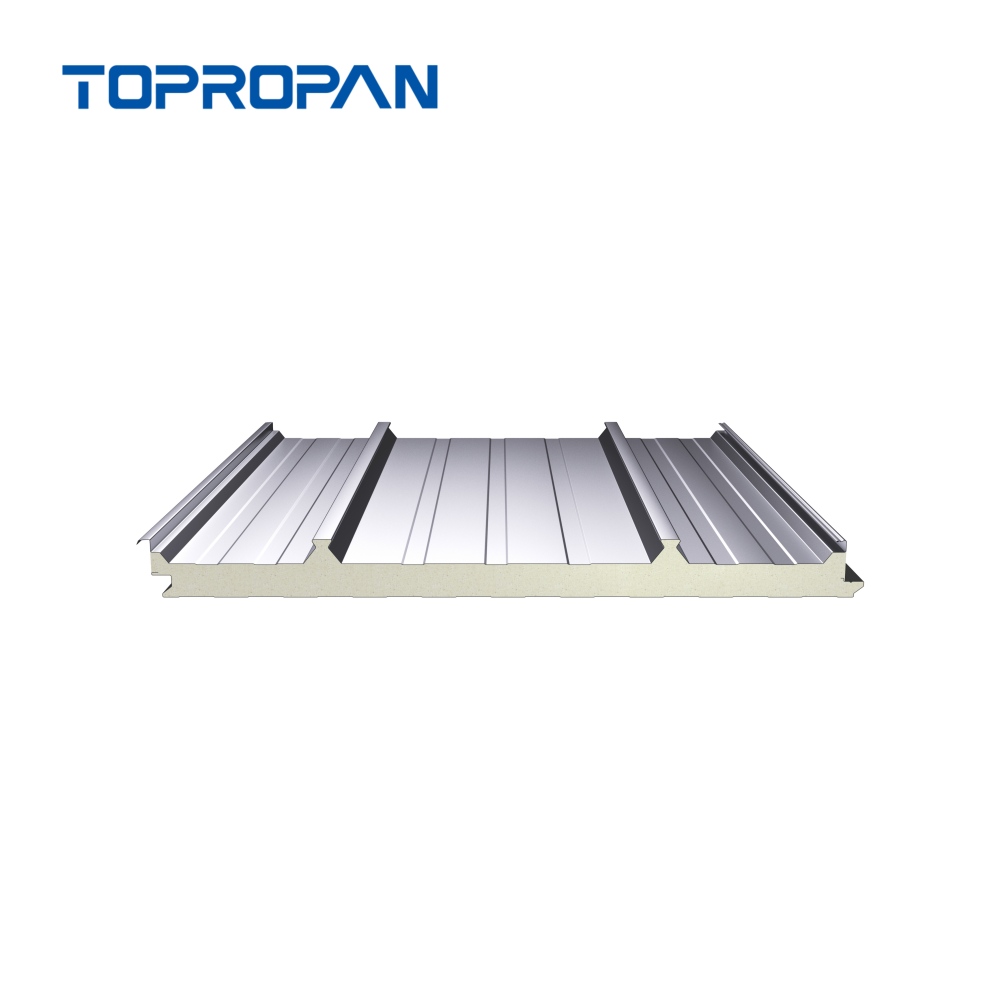
Adding heavy energy infrastructure requires rigorous structural engineering. You cannot simply bolt silicon modules onto standard lightweight decking. You must evaluate the load capacity comprehensively across the entire structural frame. A reliable solar roof panel demands a precise "sufficient capacity" formula to survive decades of unpredictable weather.
Here is what structural engineers calculate to ensure absolute physical integrity:
Cumulative PV Dead Weight: They calculate the static mass of the solar modules, micro-inverters, cabling, and heavy aluminum racking systems resting permanently on the purlins.
Dynamic Wind Uplift: They measure the aggressive pulling force exerted by coastal storms or high-altitude gales attempting to rip the panels upward.
Regional Snow Loads: They account for the compounded seasonal weight of ice and wet snow pressing down heavily on the delicate array during winter.
Penetration-free mounting systems revolutionize this installation process. They utilize clever standing seam designs or highly customized profile clamping. These specialized aluminum fasteners secure all heavy solar components tightly. They never pierce the delicate steel weather membrane. They leave the internal PU core completely intact and perfectly sealed against humidity.
However, you still face specific implementation risks on the active job site. Mishandling long materials causes hidden structural damage before installation even finishes. You must adhere strictly to engineered span tables during the initial design phase. Stretching steel supports too far causes excessive roof flex under heavy wind loads. This specific structural flex leads directly to micro-cracking inside the fragile crystalline PV cells. Proper span planning prevents this catastrophic and costly failure.
Balancing higher initial capital expenditure (CAPEX) against operating expenses (OPEX) takes smart financial strategy. You pay more upfront for advanced material integration and thicker PU cores. However, you earn compounded financial savings rapidly over the system's active life. Reduced HVAC utility bills and newly generated solar credits offset the initial premium exceptionally quickly.
Component lifespan synchronization presents a major engineering challenge for facility teams. A premium polyurethane sandwich panel usually lasts 30 to 40 years without degrading mechanically. Modern PV modules typically follow a strict 20 to 25-year performance degradation curve. You must ensure the base roof actively outlives the solar array above it. Replacing a compromised, leaky roof beneath an active solar array ruins your financial model entirely. You lose massive amounts of money on redundant labor and system downtime.
Transparent maintenance and degradation assumptions keep your projections incredibly realistic. You must model your expected payback period skeptically to appease internal investors and banking partners.
Include these vital OPEX factors in your baseline financial model:
Schedule routine module cleaning events based on local agricultural dust or industrial soot levels in your specific region.
Budget proactively for inevitable string inverter replacement costs hitting around the 10-year or 15-year operational mark.
Conduct annual visual inspections of all aluminum mounting clamps and perimeter silicone sealants to catch early failures.
To further clarify long-term OPEX tracking, review this recommended maintenance frequency table:
Table 1: Recommended Maintenance Frequency | ||
Maintenance Task | Frequency | Primary Purpose |
|---|---|---|
Surface Solar Module Cleaning | Biannually | Maintain optimal solar generation efficiency and remove shading debris |
Clamp Torque Verification | Annually | Prevent wind-induced racking shift and mechanical loosening |
Infrared Thermal Imaging | Every 3 Years | Detect invisible micro-cracks or hazardous hot spots inside PV cells |
Accounting for these precise variables guarantees your ROI remains highly predictable. Your financial department will appreciate the robust, surprise-free planning model.
Navigating fire safety compliance represents your very first procurement hurdle. Combining live electrical generation with a thick insulated core demands strict regulatory oversight. Always look for advanced PIR or PUR core formulations from your chosen vendor. They must hold specific fire ratings, such as rigorous FM approvals or strict ASTM standard testing. A fully certified photovoltaic PU roof panel actively resists flame spread during an emergency.
Vendor accountability often fractures painfully during large commercial projects. You face frustrating split warranties regularly in this sector. The roofing manufacturer often blames the solar installer for sudden internal leaks. The solar company quickly blames the roofers for structural settling. You urgently need a single-source integrated system warranty. This legal framework consolidates liability completely. It protects your capital investment from endless finger-pointing and delayed repairs.
Take these immediate next-step actions before issuing your final Request for Proposal (RFP):
Initiate a pre-project structural audit of your existing building frame to confirm basic weight-bearing viability.
Run a comprehensive digital energy modeling simulation based exactly on your local regional climate and sun hours.
Perform an exact load-bearing calculation in direct collaboration with a licensed structural engineer.
These proactive steps prevent incredibly expensive change orders later. They lock down your strict scope of work and force competing vendors to quote accurately based on hard physical data.
The energy-saving potential of integrated roof systems stands exceptionally high today. They boldly transform empty, useless real estate into aggressive cost-reduction assets for your business. However, ultimate success dictates that the system is engineered holistically from day one. Bolting heavy solar panels onto a flimsy roof as a mere afterthought rarely yields maximum efficiency. It introduces dangerous structural risks and massive thermal bridging. By combining superior polyurethane heat retention with active solar generation, you secure a highly profitable, self-sustaining building envelope.
Decision-makers should act on these technical principles immediately. Request a site-specific energy modeling report from your current vendors today. Commission a dedicated structural load assessment from a highly qualified integration specialist. Start building a smarter, significantly more resilient facility right now.
A: No. Standard PU panels lack the specialized structural profiles required for heavy live loads. Load-optimized panels feature thicker steel skins, higher-density cores, and specific exterior ribbing. These unique profiles are engineered specifically to accept penetration-free solar mounts without buckling under dynamic wind or snow pressures.
A: You must consult a licensed structural engineer. They evaluate the maximum span width between purlins, the specific PU core density, and local building codes. They calculate the cumulative dead load of the solar arrays combined with seasonal live loads, ensuring the panel limits deflection and prevents micro-cracking.
A: It generally does not void the warranty if you use purpose-built photovoltaic integration systems. These systems utilize specialized, non-penetrating brackets. They grip the raised outer metal sheet profile firmly. Because they never breach the steel membrane or puncture the PU core, the original waterproofing warranty remains entirely intact.


