

Views: 0 Author: Site Editor Publish Time: 2026-05-07 Origin: Site


Selecting the right building materials for temperature-controlled facilities goes beyond basic construction. It represents a critical risk-management decision. Your upfront thermal performance directly dictates long-term HVAC energy consumption. It also ensures strict product viability over time. Facility managers face a complex dilemma during the design phase. You must balance thermal resistance, structural integrity, fire safety compliance, and strict hygiene standards. Navigating these requirements can feel overwhelming when protecting sensitive inventory is your top priority. This article provides an evidence-based framework to help you navigate these technical choices. We will help you evaluate and specify the exact refrigeration building panel required for your specific facility. You will learn how to map panel thickness to temperature zones accurately. We will also explore compliant core materials and evaluate advanced joint sealing mechanisms. This guide prepares you to optimize your cold storage infrastructure effectively.
Panel thickness must directly map to target temperature zones (ranging from 80mm for chilling to 200mm for blast freezing).
Core material selection (PUR/PIR vs. Rockwool) dictates insurance eligibility and fire-code compliance (e.g., FM Approval).
Thermal efficiency relies as much on joint sealing (EPDM gaskets, Cam-locks) as it does on the panel's internal R-value.
Surface coatings should be customized based on internal hygiene requirements (PVC/PET for cleanrooms) and external durability (Aluminum/Stainless Steel).
Specifying panel thickness is an exact science. It relies heavily on your desired internal temperature and the external ambient conditions. Guesswork has no place in commercial refrigeration design. Over-specifying thickness wastes valuable physical space and resources. Conversely, under-specifying thickness causes immediate thermal bridging. This forces cooling units into continuous overdrive. Ultimately, this leads to premature compressor burnout and fluctuating internal climates.
You must align your insulation envelope with the specific operational demands of your room. Different storage environments require vastly different thermal barriers. Industry standards dictate specific thickness ranges to maintain internal stability.
We rely on an evidence-based matrix to determine the optimal panel thickness. This approach ensures maximum thermal efficiency across various operational zones.
Temperature Zone | Internal Temperature | Recommended Thickness | Typical Applications |
|---|---|---|---|
Chilling Rooms | +0°C / +32°F | 60mm to 80mm | Food processing, standard temperature-controlled logistics. |
Freezer Rooms | -1°C to -20°C / 30°F to -4°F | 100mm to 140mm | Deep-freeze storage, commercial meat/dairy preservation. |
Blast Freezers / Tunnels | -40°C / -40°F | 150mm to 200mm | Extreme temperature deltas, rapid cooling cycles. |
For standard chilling rooms, 60mm to 80mm panels provide adequate protection. These work perfectly for standard food processing areas. Freezer rooms demand much more robust protection. You must use 100mm to 140mm panels here. This thickness prevents thermal bridging and maintains deep-freeze integrity during door cycling. Blast freezers require extreme measures. You must demand 150mm to 200mm heavy-duty thermal insulation panel options here. These thick panels handle extreme temperature deltas and endure rapid, aggressive cooling cycles without structural warping.
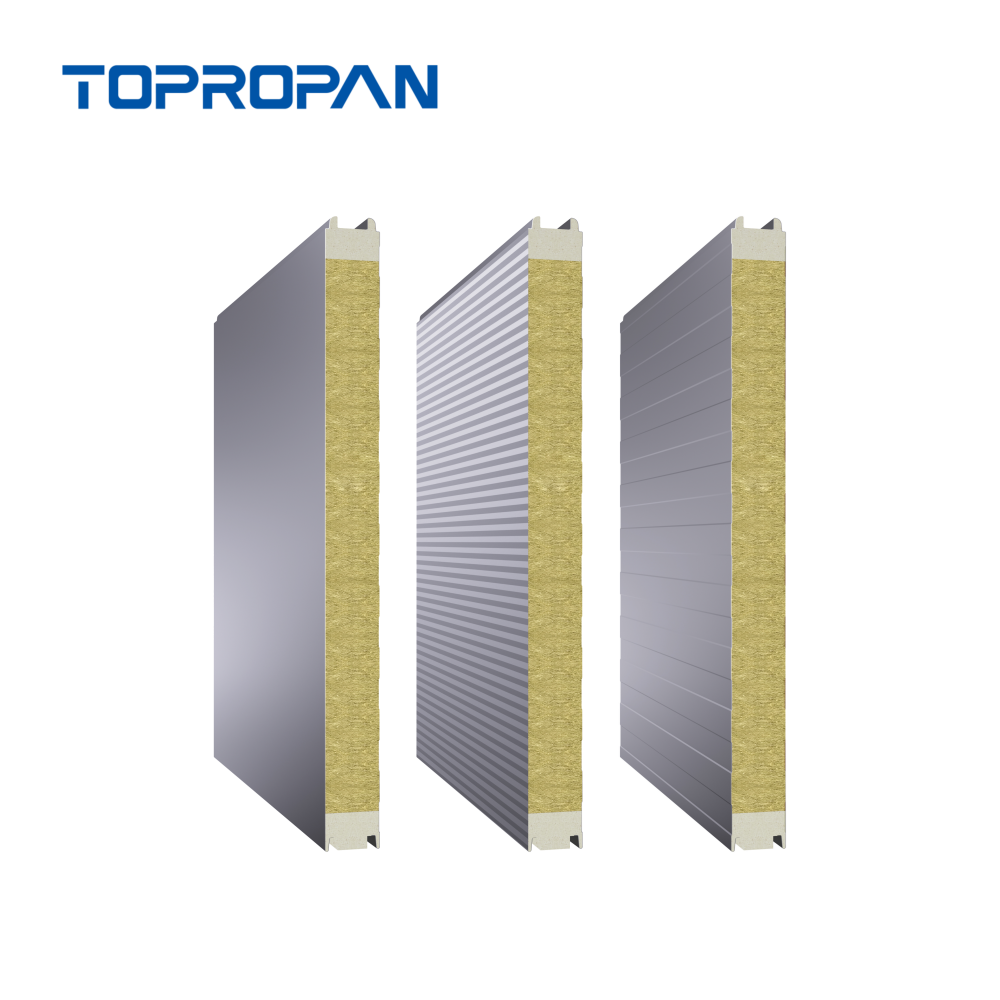
You must look beyond basic marketing claims when selecting an insulating core. The core material spectrum directly impacts commercial viability and operational risk. Your choice determines fire safety compliance, structural rigidity, and overall thermal resistance.
The industry offers three distinct categories of core materials. Each category carries specific benefits and notable risks.
Entry-Level (EPS/XPS): Expanded polystyrene offers effective thermal resistance. However, it is highly vulnerable to fire. We strongly advise against using EPS in high-risk industrial facilities. Modern commercial insurers frequently reject facilities built with exposed EPS cores. The fire propagation risks simply outweigh any short-term benefits.
The Commercial Standard (PU / PIR): Polyurethane (PU) and Polyisocyanurate (PIR) represent the optimal mid-to-high-range choices. A quality PU cold room panel delivers exceptional thermal resistance. PUR generally averages an R-Value of 5 to 7.1 per inch. PIR improves upon this, averaging 7 to 7.2 per inch. PIR also introduces superior fire-retardant chemical structures. This makes it the dominant standard in modern refrigeration construction.
The Fire-Safe Alternative (Rockwool): Mineral wool excels in scenarios requiring strict fire ratings. It can achieve 60, 120, or even 240-minute fire resistance certifications. However, this comes with physical trade-offs. Rockwool panels weigh significantly more than PIR panels. They also offer slightly lower thermal resistance per inch. You must factor this into your structural load calculations.
Selecting a good core is only the first step. You must view your panel selection through the lens of FM Approval. We educate buyers to always request FM Approval documentation. This certification validates more than just the panel itself. It tests the entire installation system. It confirms how the joints, panels, and anchors perform together during a fire. Relying on FM-approved materials drastically reduces facility risk. It also streamlines compliance inspections with local fire marshals.
A high R-value means absolutely nothing if your joints fail. Connection joints often serve as the weakest link in any cold storage envelope. Poor joints allow thermal bridging. They also permit severe moisture ingress. This leads to dangerous condensation and ice buildup inside the facility.
Engineers have developed sophisticated mechanisms to prevent thermal leaks. You must specify exact joint configurations to guarantee a hermetic seal.
Cam-Lock Systems: These utilize eccentric hook systems embedded within the foam. They offer a massive operational advantage. Installers simply join the panels and lock them using an Allen key. This creates a rapid, incredibly tight assembly. It physically pulls the panel faces together, ensuring continuous insulation contact.
Tongue and Groove with EPDM: Standard friction-fit joints are insufficient for deep freezers. You must detail the necessity of double-ridge EPDM gaskets within the joint profiles. When panels interlock, these rubber gaskets compress. They hermetically seal the microscopic gaps. This completely prevents condensation buildup and blocks warm air infiltration.
Internal foam density directly dictates structural integrity. You must demand verifiable density metrics from your suppliers. Frame 42kg/m³ as the transparent, reliable industry benchmark. High-quality cold storage sandwich panel systems strictly adhere to this density. Foam poured at 42kg/m³ ensures sufficient structural rigidity. It allows panels to span required horizontal and vertical distances without bowing. Lower density foam compromises both the R-value and the mechanical strength of the wall.
The exterior and interior faces of your panels serve vastly different purposes. Selecting a uniform material for both sides often represents a missed engineering opportunity. We advocate for a highly customized approach to surface finishes.
You should introduce an asymmetrical material strategy into your facility design. This means utilizing different materials for the interior and exterior faces based purely on functional need. This prevents over-engineering where it is unnecessary while reinforcing critical wear zones.
The internal environment dictates your interior surface finish. Processing facilities endure harsh conditions daily.
We recommend heavy-duty Stainless Steel for meat and fish processing plants. These environments require continuous, heavy chemical washdowns. Stainless steel provides unmatched rust prevention and withstands high-pressure sanitation hoses.
Pharmaceutical facilities and food-grade cleanrooms require different properties. Here, we highly recommend PVC or PET coatings. A 120 μm PET coating creates a microscopically smooth surface. This prevents bacterial accumulation and biofilm formation. It also easily tolerates aggressive sanitary chemicals without degrading or flaking over time.
Your exterior panel faces face entirely different threats. They must resist ambient weather, physical impacts, and general warehouse wear.
We suggest using pre-painted galvanized steel for standard outer shells. Aluminum-zinc plating serves as an excellent alternative for humid environments. These finishes maintain exceptional environmental weatherability. They resist peeling and oxidation. This ensures the structural envelope remains secure against ambient moisture penetration.
Evaluating panels requires looking at physical deployment factors. You must consider how the panels perform during construction and throughout their operational lifespan. A holistic evaluation prevents catastrophic design failures.
Time represents a critical variable in facility construction. Precision-engineered insulated metal panels (IMPs) drastically reduce labor hours. Traditional multi-layer construction requires separate framing, insulation, and vapor barrier steps. IMPs combine these into a single, unified component. The tongue-and-groove systems interlock rapidly. This allows construction crews to enclose large square footages in a fraction of the traditional time. Faster installation velocity means your facility achieves operational status much sooner.
Physical panel properties directly impact long-term energy dynamics. Selecting a thicker panel with a superior PIR core changes the facility's thermodynamic profile. It physically reduces the mechanical load placed on your refrigeration units. Compressors cycle less frequently. Evaporators require fewer defrost cycles. This superior thermal buffer physically protects your facility against macro-energy fluctuations. It ensures stable, efficient cooling operations regardless of external ambient temperature spikes.
Insulated panels must do more than just block heat. They often serve as structural components. You must remind your engineering team to verify span tables with the manufacturers. Ceiling and wall panels frequently support heavy auxiliary equipment. You must ensure the chosen panel density and metal facing can safely support heavy refrigeration evaporators. They must also bear the weight of overhead lighting trays and suspended racking systems. Failing to verify these load capacities can lead to dangerous structural deflections.
Specifying the correct cold storage envelope requires a methodical, evidence-based approach. We strongly recommend following a strict shortlisting logic. First, define your exact target temperature zones. Next, select the appropriate core material, heavily prioritizing PIR or FM-approved systems for safety. Then, determine the exact thickness required to prevent thermal bridging. Finally, specify your joint mechanisms and asymmetrical surface finishes based on hygiene and durability needs.
Before making any final decisions, take deliberate action. Advise your procurement team to request comprehensive technical data sheets (TDS) from every shortlisted supplier. Demand verified span capacity tables. Request localized thermal modeling reports. These documents provide the empirical proof needed to ensure your facility performs flawlessly under demanding industrial conditions.
A: The industry standard for commercial polyurethane cold room panels is 40 to 42kg/m³. This specific density provides the optimal balance between high thermal insulation and necessary structural stability. Falling below this threshold risks panel bowing and reduced thermal resistance.
A: Yes, provided they are properly engineered. High-density IMPs feature excellent spanning capabilities. However, you must always consult the manufacturer's load-rating tables. Heavy evaporators often require specific structural ceiling reinforcements or heavy-duty panel facings to prevent deflection.
A: The primary difference is chemical composition. Polyisocyanurate (PIR) utilizes a different blending ratio that creates a more stable, highly cross-linked chemical structure. This gives PIR superior fire-retardant properties, lower smoke emission, and slightly higher thermal stability compared to standard Polyurethane (PUR).
A: EPDM gaskets feature a highly compressible double-ridge design. When panels interlock, these gaskets compress inside the tongue-and-groove joint. This physically blocks micro-leaks, prevents warm air infiltration, eliminates joint icing, and drastically reduces continuous energy loss.


